01
Progressive recall
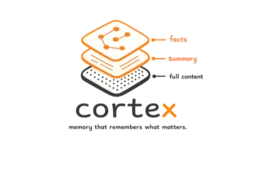
3-layer retrieval (facts → summaries → full content) stops at the cheapest layer that answers — facts cost 5–15 tokens.
For Claude Code
Memory that remembers what matters.
Cortex gives Claude Code persistent memory through a 3-layer retrieval system that returns only what's relevant, using ~66% fewer tokens on average. It automatically extracts structured facts from your memories and code into a queryable knowledge graph, with entity normalization and multi-hop traversal. Everything stays local — SQLite + Python, zero API calls, zero cost. It's the memory the rest of the family plugs into, and the project that named the lab.
$ pip install cortex-claude && cortex-claude setup 3-layer retrieval (facts → summaries → full content) stops at the cheapest layer that answers — facts cost 5–15 tokens.
Auto-extracted structured facts with entity normalization, deduplication, and multi-hop traversal across connections.
Tree-sitter indexes symbols across 7 languages — ~100 tokens to look one up vs 1000+ to read the file.
Hooks capture results from your tools and a background daemon saves them in about 0.3 seconds.
Memories group into semantic sub-graphs with human-readable labels — browse topics top-down before drilling in.
Unused memories fade, contradicted facts lose confidence, and timestamps keep recall fresh instead of stale.